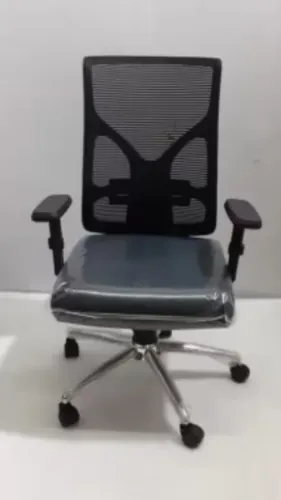
Mesh seating has become common in contemporary offices because it can combine a visually light design with airflow and flexible back support. Yet not every mesh chair has the same construction or performance characteristics.
Businesses evaluating a Mesh Office Chair supplier should look at the complete chair rather than assuming the mesh back itself determines quality.
Examine the Mesh Construction
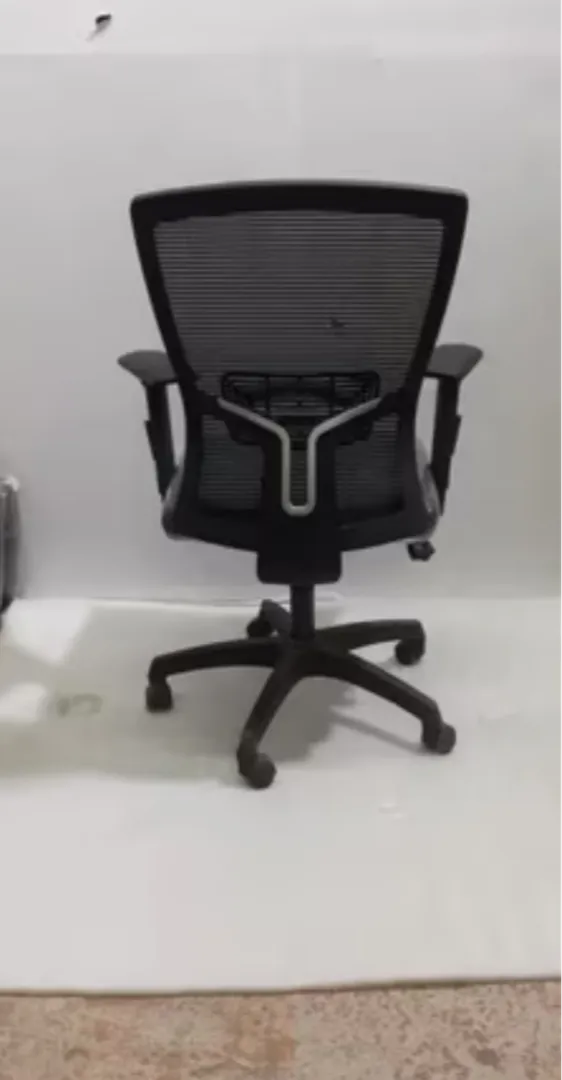
The mesh forms an important contact surface and should maintain appropriate tension during normal use.
When reviewing a chair, look at how the mesh is attached to the frame and whether the backrest maintains its shape under ordinary sitting pressure. The surrounding frame should also feel stable.
Different chairs use different mesh materials and construction methods, so buyers should evaluate the actual specification rather than relying solely on the term 'mesh chair.'
Compare Back Support and Adjustment
A breathable backrest can be useful, but comfort also depends on shape and adjustability.
Some mesh chairs include integrated lumbar contours, while others use adjustable lumbar components. Models may also offer tilt, armrest adjustment, headrests, and seat-height control.
Businesses should prioritise adjustments that match employee needs rather than automatically choosing the model with the longest feature list.
Pay Attention to the Seat
A chair described as a mesh chair may have a mesh back combined with a cushioned fabric seat. Other designs can use mesh across a larger portion of the seating surface.
Each configuration has different characteristics.
The seat should provide appropriate width and depth for the intended users. The front edge should not create uncomfortable pressure during normal sitting.
Consider Delhi's Working Environment
Delhi experiences substantial seasonal temperature variation. While most corporate offices use air conditioning, employees can still value seating materials that manage heat effectively during extended sitting.
Mesh may be attractive for this reason, particularly in IT offices, coworking spaces, call centres, and other environments where chairs are occupied for long periods.
Cleaning requirements should also be considered. Dust can collect around frames, casters, mechanisms, and mesh surfaces, making routine maintenance important.
Test the Mechanisms
Before a large order, check how easily users can operate the available controls.
Ask employees to test:
- Height adjustment
- Backrest tilt
- Tilt locking
- Armrest movement
- Headrest adjustment where provided
- Caster movement
- Rotation
Controls should be understandable without employees having to struggle with the chair.
Assess Bulk Supply Requirements
A large office project requires more than product selection. Quantity, delivery scheduling, floor-wise distribution, assembly, and specification consistency may all matter.
Inditech Engineer supplies office seating for Delhi businesses and commercial facilities, including mesh configurations suited to different workplace applications. Procurement teams can benefit from discussing these operational requirements alongside product specifications.
Mesh Chair FAQs
Does mesh stretch over time?
Material performance varies according to construction, quality, loading, and use. Buyers should ask about the specifications of the model being considered.
Are mesh chairs suitable for executives?
Yes, depending on the design. High-back mesh chairs can be used in executive and managerial spaces as well as employee workstations.
What maintenance is required?
Routine cleaning and inspection of mesh, frames, casters, fasteners, and adjustment mechanisms can help maintain chair performance.
The better comparison is not simply mesh against another material. It is whether a particular chair provides the right combination of dimensions, support, adjustability, construction, and maintenance requirements for the workplace in which it will be used.
Keywords