Comfort depends on the relationship between the chair, the desk, the user, and the work being performed—not on the word “ergonomic” in a catalogue. By mapping work patterns, measuring each space, comparing documented specifications, and testing representative chairs, you can create a seating plan that fits both everyday office work and specialist environments.
Key takeaways
- Match chairs to sitting duration, movement, and user variation.
- Measure desk height, legroom, and clearance before ordering.
- Compare seat height, adjustments, base design, and upholstery—not product names.
- Specify separate performance requirements for continuous-use and ESD work areas.
Match Chair Specifications to Real Work Patterns
Match the chair to duration, movement, user variation, and the desk—not to job title alone.
| Work pattern | Suitable specification | Avoid |
|---|---|---|
| Eight-hour desk work | Mid-back or high-back support, adjustable lumbar support, seat-depth adjustment, height-adjustable arms, synchro tilt, and a five-star base | Fixed arms, shallow seats, and non-adjustable backs |
| Hot-desk seating | Wide seat-height range, simple controls, durable fabric or mesh, easy cleaning, and arms that fit different desk widths | Complex adjustments users will not reset |
| Reception | A supportive mid-back reception chair, stable revolving movement, wipeable upholstery, and a polished appearance | Casters that roll into visitor paths or upholstery that marks easily |
| Meetings | For a meeting seating experience with fixed chairs or occasional seating, choose low-back or mid-back chairs with modest padding and controlled movement | Deep recline and bulky arms under fixed tables |
| Managerial cabin | High-back or mid-back support, adjustable recline, quality upholstery, and arms matched to the desk and conference use | Oversized dimensions that restrict circulation |
| Short visitor seating | Low-back, compact, easy-clean visitor seating with stable legs or limited swivel | Full ergonomic mechanisms that add cost without useful adjustment |
For eight-hour desk work, treat the chair and workstation as one system. Check desk height, monitor position, keyboard clearance, and legroom after adjustment; a chair that fits alone can still force raised shoulders or bent wrists.
Armrests are not automatically beneficial. Use height-adjustable arms for mixed users, or omit them when close keyboard approach matters; overly wide or high arms block the desk and elevate shoulders.
Choose mesh for airflow, fabric for warmth and repairability, and leather-like upholstery for a formal, wipe-clean cabin. Confirm the supplier’s rated occupant mass and duty cycle rather than assuming every revolving office chair suits continuous use.
Measure the Workstation Before You Order
Measure desk height, knee clearance, aisle width, chair pull-out space, and clearance under fixed conference tables before selecting a revolving chair. Measure from the finished floor, including carpet or mats, and record the narrowest point rather than the most generous one.
- Measure desk height from floor to the work surface and from floor to the underside of its apron, drawers, or cable tray.
- Measure knee clearance at the user’s centre position: height, width, and depth. Check for pedestal drawers, modesty panels, power boxes, and crossbars.
- Measure chair pull-out space from the desk edge to the nearest wall, partition, cabinet, or circulation route. Include the chair’s full depth when reclined and the armrests at their widest setting.
- Measure the narrowest aisle beside and behind the chair, then test whether a seated user can turn without blocking a door or walkway.
- For a fixed conference table, measure clearance under the tabletop and between its legs or pedestal. A chair that fits beside the table can still fail when its arms or five-star base meet the support structure.
| Work setting | Measurement priority | Chair decision |
|---|---|---|
| Dedicated desk | Desk underside, knee depth, pull-out space | Specify arms and seat depth that let the user approach fully |
| Shared workstation | Adjustment range and surrounding aisle | Choose fast seat, back, and arm adjustments |
| Fixed conference table | Under-table height, leg spacing, base clearance | Use armless or narrow-arm chairs if the structure restricts entry |
| Carpeted or hard floor | Surface type and transitions | Match caster or glide type to prevent excess rolling or snagging |
Compare the Supplier Specification, Not the Product Name
A product name or “ergonomic” label proves nothing about fit. Ask the revolving office chair supplier for measured adjustment ranges and test evidence that match your users, desk height, and work pattern.
- Record the seat height range, seat width, seat depth, back height and lumbar support position, armrest adjustability, tilt mechanism, and recline lock. Confirm that shorter users can sit against the backrest without pressure behind the knees.
- Specify the five-star base, caster type, cylinder class, upholstery, and weight capacity. State whether the weight capacity covers the complete chair, which test standard applies, and what duty cycle the rating assumes.
- Request compliance evidence for ANSI/BIFMA X5.1, but do not treat it as proof of comfort, user fit, or 24-hour durability. Ask Inditech Engineer-Office Chair Manufacturer to state the tested configuration rather than relying on a catalogue model name.
| Supplier evidence | What it lets you compare | Risk if missing |
|---|---|---|
| Adjustment drawing with tolerances | Actual fit across your user range | A fixed deep seat leaves shorter users unsupported |
| Warranty terms and exclusions | Coverage period, mechanism failures, labour, and shipping | A cheap chair becomes expensive after one breakdown |
| Replacement parts list, prices, and lead times | Availability of casters, gas lifts, arm pads, mechanisms, cushions, upholstery, and conductive parts | An unapproved part can change safety or ESD performance |
For continuous-use seating, request duty-cycle evidence, replaceable cushions and casters, cleanability data, and service-part availability separately from a standard office rating. Confirm that replacement parts preserve the original specification.
Related products
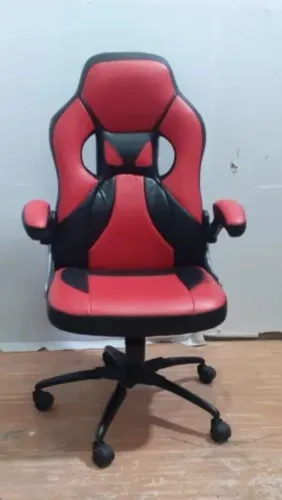
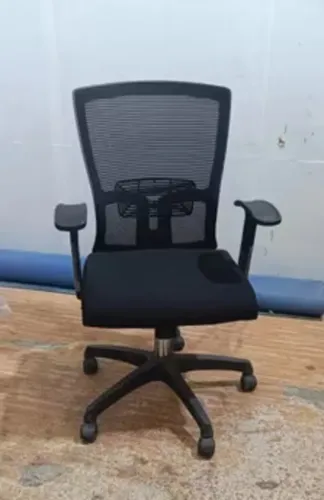
 | Revolving Office Chair Mid Back Revolving Office Chair ₹4000 Ergonomic Comfort & Flexibility by INDI TECH ENGINEER Overview: The Mid Back Revolving Office Chair from INDI TECH ENGINEER is expertly designed to... View product → |
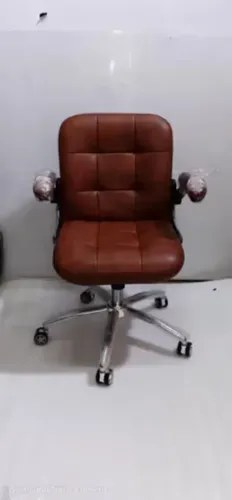
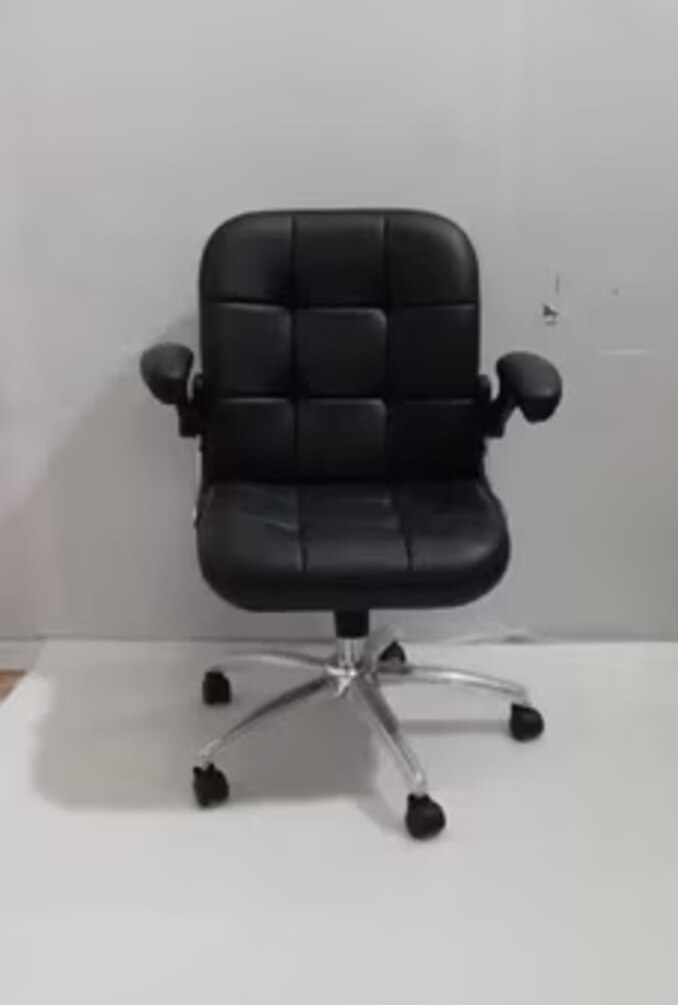
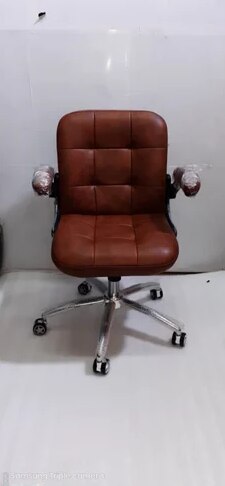 | Office Chair Brown Leather Office Low Back Revolving Chair ₹2500 Compact Comfort | Classic Design | Everyday Functionality The Brown Leather Office Low Back Revolving Chair by INDI TECH ENGINEER is designed to... View product → |
Test Fit, Movement, and Upholstery for Each User Group
Give each user a 10-minute test fit, not a quick showroom sit. Set the chair at the actual desk height, then check seat-edge pressure, foot contact with floor, and lower-back contact.
The user should reach the backrest without the seat pressing behind the knees; a deep pan fails shorter users, while a shallow one leaves taller users unsupported.
Check shoulder relaxation and armrest clearance. The user’s shoulders should stay down while forearms rest near the work surface, and armrests must clear the desk and permit close approach.
Ask the user to swivel, recline, stand, and roll to the printer; stable movement means a five-star base stays planted, casters track without sudden drag, and the chair does not tip when reaching.
Use the same trial for each user group, including the shortest and tallest regular users:
- Record seat height, usable seat depth, backrest or lumbar position, armrest height and width, and recline settings that fit each person.
- Reject a chair if users brace their feet to stop rocking, lose lower-back contact when typing, or cannot pull close to the desk.
- Repeat the test after cleaning the upholstery with the planned product and method; residue, dampness, and fading reveal practical problems.
Choose upholstery against cleaning frequency and maintenance burden. Mesh improves airflow but traps dust in the weave; fabric feels warmer and hides minor wear but absorbs spills; leather wipes clean quickly but can feel hot and needs care. Inspect seams, exposed edges, casters, and replaceable cushions before approving a model for heavy use.
Write Separate Requirements for Continuous-Use and ESD Areas
A 24/7 duty cycle changes the purchase specification: ask for duty-cycle evidence, not just a general office-chair test. Require replaceable cushions and casters, documented service-part availability, a stated occupant mass, and upholstery that withstands scheduled cleaning without cracking or losing support.
Write separate requirements for each operating environment:
- 24/7 control rooms and production areas: specify continuous-use evidence, adjustable lumbar support, stable recline, heat management, cleanable upholstery, and a repair or replacement process for high-wear parts.
- Laboratories: define chemical-cleaning exposure, spill resistance, height range, and upholstery compatibility with laboratory disinfectants and solvents. Do not assume a laboratory chair is suitable for ESD work.
- Cleanrooms: state the target cleanroom ISO 14644 classification and require evidence for particle emission, outgassing, cleanability, and materials compatibility. ESD properties do not prove cleanroom suitability.
- ESD-protected workstations: specify ESD seating, conductive casters or another approved grounding path, the resistance-to-ground test, acceptance limits, test method, and retest interval.
Treat ANSI/ESD S20.20 as a facility-level control-program standard, not a chair certificate. Check the chair against the site’s documented program and IEC 61340-5-1 requirements, then perform acceptance testing on representative installed chairs, using the actual floor and workstation conditions.
Record failed-chair disposition and periodic verification; dust, floor finish, humidity, contamination, and worn conductive paths can change results.
Frequently asked questions
How do you match a workplace chair to real work patterns?
Assess sitting duration, movement, task changes, user variation, and desk interaction instead of choosing by job title alone.
What should you measure before ordering office chairs?
Measure desk height, underside clearance, legroom, knee space, aisle width, and the space needed for chair movement.
Which chair specifications should you compare between suppliers?
Compare seat-height range, seat depth, backrest adjustment, armrest dimensions, weight capacity, caster type, base construction, upholstery, and warranty terms.
How should you test chairs for different user groups?
Have representative users test seat fit, lumbar support, adjustment access, movement, stability, and upholstery comfort during realistic tasks.
Why do continuous-use and ESD seating need separate requirements?
Continuous-use areas prioritise sustained ergonomic support and durability, while ESD areas require static-control performance, compatible flooring and grounding practices, and suitable cleanability.
Related products
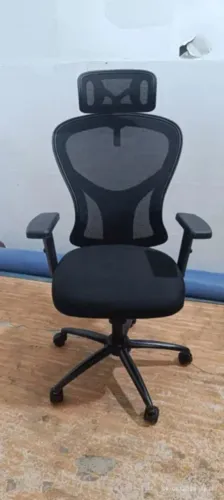
 | Office Chair ₹3000 Ergonomic Design | Breathable Mesh | Dynamic Mobility Experience the perfect blend of comfort, airflow, and modern design with the Mesh Chair... View product → |
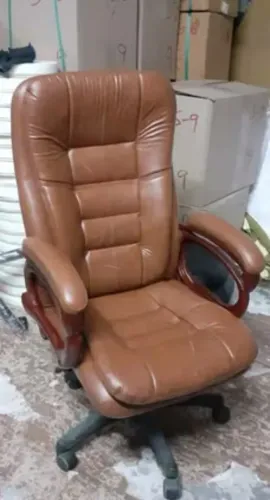
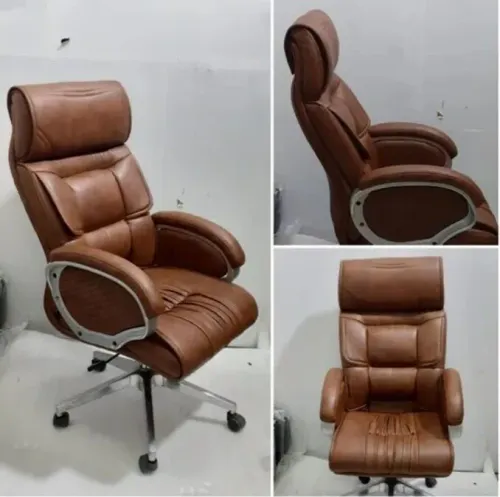
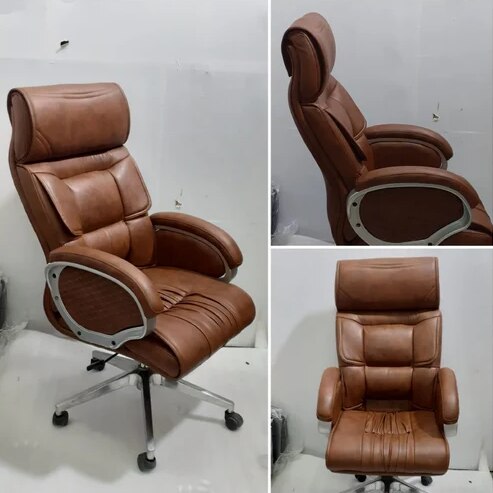 | Office Chair Brown Leather High Back Office Revolving Chair Brown Leather High Back Office Revolving Chair ₹4200 Brown Leather High Back Office Revolving Chair Premium Comfort | Executive Design | Long-Lasting Durability Upgrade your office seating experience... View product → |
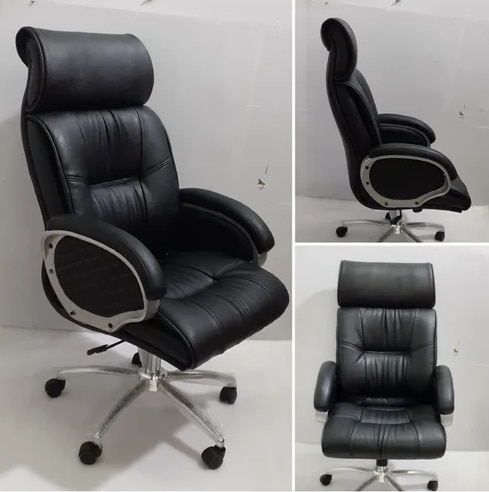 | Office Chair Black Leather High Back Office Revolving Chair ₹4500 Executive Style | Premium Comfort | Built to Last Add a touch of sophistication and authority to your office with the Black Leather High Back Office... View product → |
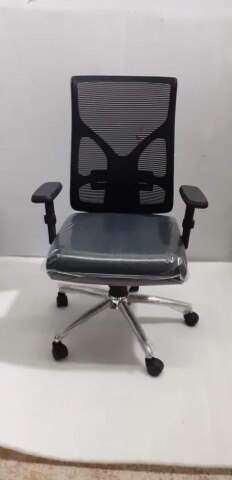 | Office Chair Fabric Low Back Office Fixed Arm Revolving Chair ₹2500 Comfortable. Compact. Cost-Effective. Upgrade your office seating with the Fabric Low Back Office Fixed Arm Revolving Chair from INDI TECH ENGINEER —... View product → |