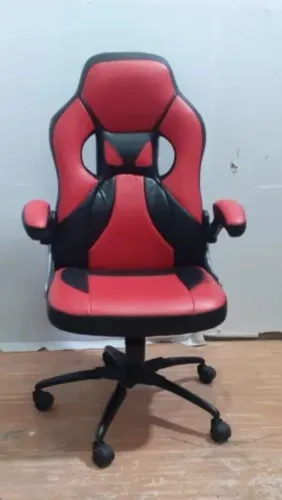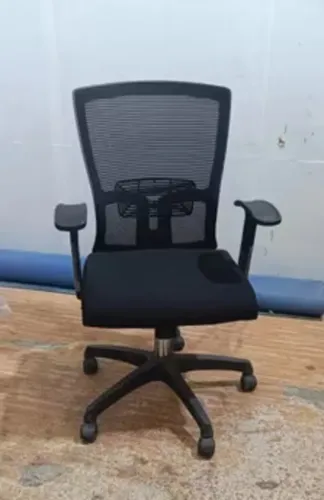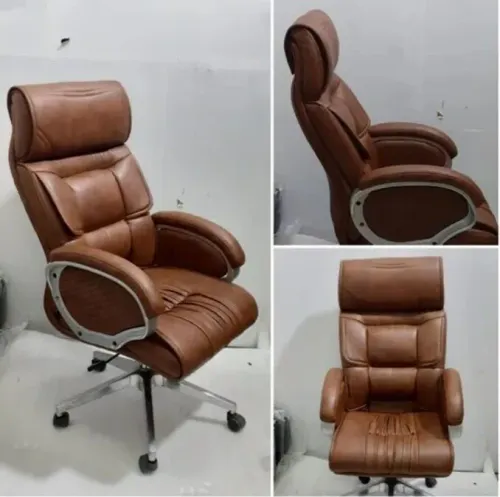
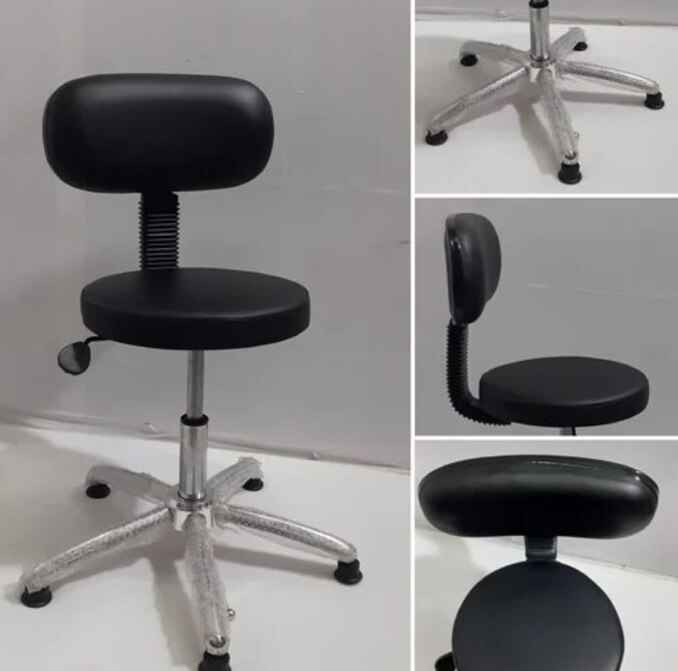
A chair can become part of the electrostatic-discharge path between a worker and sensitive electronics, but only when its materials, grounding route and surrounding floor system work together. By the end, you will know which electrical evidence to request, how to install and use the chair, and when an ESD model is worth its maintenance cost.
Key takeaways
- Connect the operator, chair and floor through a verified ESD path.
- Ask for resistance test results, not just an “ESD-safe” label.
- Match chair casters and flooring to each protected work zone.
- Inspect grounding parts, upholstery and resistance throughout the chair’s life.
How a person, chair and floor form an ESD path
A seated operator, chair and floor form an electrostatic discharge circuit: charge leaves the person through clothing and the seat, travels through the chair’s internal parts, then reaches a suitable floor or grounding connection. Seating therefore affects whether accumulated charge drains gradually or discharges suddenly into an exposed circuit board, sensor or other ESD-sensitive item.
- The person supplies the charge. Movement against upholstery, clothing or the seat can generate static before the operator touches a component.
- The chair carries the charge. The path can cross the upholstery, seat pan, mechanism, gas lift, base and casters. An ordinary office chair often breaks that path with insulating upholstery, plastic parts or painted frames.
- The floor completes the path. Conductive or dissipative casters and glides work only when they contact a suitable conductive floor connected to the approved grounding design.
A conductive seat surface does not prove that a seated operator is grounded. One insulating component can interrupt the route, and an insulating floor can leave charge trapped in the chair even when its internal resistance looks acceptable. The chair also does not neutralise charged tools, plastic packaging, garments, work surfaces or visitors.
Evaluate the complete chair, person, footwear, floor and working movement together; resistance alone misses charge generation from contact and separation.
Which electrical specifications prove a chair is ESD-controlled?
Ask for a report that measures the assembled chair, not merely its upholstery. The electrical path includes the seat, frame, mechanism, gas lift, base, casters or glides, and the floor or grounding connection. One insulating joint can leave a seated operator ungrounded.
| Label | Electrical meaning | Evidence to request |
|---|---|---|
| Antistatic | A marketing term with no guaranteed resistance limit or test result | Test method, measured range, and complete-chair report |
| Conductive seating | Material below 1.0 × 10⁴ ohms | Point-to-point result plus resistance-to-ground for the assembled chair |
| Static-dissipative seating | Material from 1.0 × 10⁴ to below 1.0 × 10¹¹ ohms | Same measurements, with test conditions and acceptance criterion stated |
These material categories do not prove that the chair meets a chair-to-ground requirement. Request testing under IEC 61340-2-3, including resistance-to-ground or point-to-point resistance, the actual floor and footwear configuration, humidity and temperature, and a charge-generation result where applicable. Check for conductive frame parts, charge-dissipative casters or glides, and a grounding chain or cable.
IEC 61340-5-1 addresses the complete ESD control programme, not a standalone chair. A report should identify the model, configuration, date, instruments and test results, and confirm that the result applies to the complete assembled chair.
Do not treat the ESD resistance as mains-shock protection or connect the chair to arbitrary building metalwork; use the facility’s approved grounding design.
How should you install and use ESD seating in different work zones?
A chair grounds a seated operator only when the complete path—from the operator’s contact surface to the facility’s common point ground—remains conductive or dissipative. Upholstery, mechanism, gas lift, frame, casters or glides, floor, and any grounding cable all count; one insulating break defeats the route.
Install and use the chair according to the work zone:
- Electronics EPA: connect the chair’s grounding chain or cable to the designated common point ground, and use ESD flooring or charge-dissipative floor mats. Do not place it on ordinary vinyl, carpet, or an ungrounded mat.
- Laboratory or cleanroom: confirm that the floor, footwear, chair materials, and cleaning process are compatible with the site’s ESD and contamination controls. A cleanroom label does not prove electrical grounding.
- Technical or repair area: keep conductive casters or glides in contact with the approved floor; do not replace them with standard nylon parts. Keep the chair away from isolated platforms unless a tested grounding lead bridges the isolation.
Measure the complete assembled chair in its installed position, with the operator-contact surface and grounding route included. Use IEC 61340-2-3 for resistance and resistance-to-ground measurements, and request seating results tested to ANSI/ESD STM12.1. ANSI/ESD S20.20 governs the wider ESD-control programme, not the chair alone.
Verify the operator’s footwear, wrist strap, or other personnel grounding method separately; a chair cannot replace them. Dry conditions increase charge generation, so maintain the facility’s specified environmental limits.
Which chair features improve work without weakening ESD control?
Balance the chair in this order: preserve the tested electrical path, fit the worker and task, then meet cleaning and room controls. Adjustable height must position the operator at the work surface without forcing raised shoulders; armrests help during precision work only if they do not obstruct benches or contact sensitive assemblies.
| Option | What to compare | When it applies |
|---|---|---|
| ESD casters and glides | Confirm both are part of the tested resistance-to-ground path; ordinary plastic wheels can interrupt it. | Use casters for frequent repositioning; use glides for fixed stations and simpler cleaning. |
| Foot ring | Choose a stable, cleanable ring that supports shorter users at a high seat. | Use with high benches or stools; avoid it if it becomes a trip point or traps contamination. |
| Armrests | Select height-adjustable, narrow armrests made from cleanable, low-shedding materials. | Use for microscope, inspection or seated assembly work; omit them where they strike fixtures. |
| Cleanroom upholstery | Require sealed, non-shedding surfaces and a design without deep seams or exposed foam. | Use in controlled environments where ordinary fabric releases particles. |
| Task-specific frame | Match a backrest and seat depth to sustained work, or a stool profile to brief perching. | Choose a stool for access and movement, not as a substitute for support during long shifts. |
Inditech Engineer-Office Chair Manufacturer can help you compare a four-leg stool with a wheeled chair by the actual bench height, cleaning method and grounding arrangement. Ask for the complete chair-to-ground test, not just a conductive seat claim, and connect any grounding cable only through the facility’s approved design.
Related products
 | ESD Chair ₹2500 Esd Safe Chairs for INDI TECH ENGINEER Introduction: When working in environments sensitive to Electrostatic Discharge (ESD), it’s crucial to ensure... View product → |
 | Esd Safe Chairs ₹2500 Static-Safe Seating | Durable Design | Cleanroom-Ready The ESD Plastic 4 Leg Frame Stool from INDI TECH ENGINEER is a reliable and cost-effective... View product → |
What should you verify, maintain and replace over the chair’s life?
Do not approve a chair because its label says “antistatic.” Make the purchasing checklist an evidence request covering the complete assembled chair, not upholstery alone.
- Test report naming IEC 61340-2-3, the test method, test conditions and resistance-to-ground or point-to-point results
- Charge-generation results when the chair will contact clothing or sensitive devices
- Identification of conductive upholstery, frame, casters or glides, and the grounding chain or cable
- Confirmation of cleanroom compatibility, including particle-shedding, materials and cleaning limits
Record the chair’s model, serial or batch number, installation area and approved grounding connection. Keep those records with the facility’s IEC 61340-5-1 programme so a failed measurement can be traced to a specific chair rather than treated as a general problem.
Clean according to the manufacturer’s written procedure. Use only approved cleaners; skin oils, dust and residue can alter surface resistance, while abrasive wiping can damage conductive fibres or coatings. Do not substitute a disinfectant because it is convenient.
Schedule resistance retesting after installation, at a defined interval, and after replacing casters, upholstery, cables or other electrical parts. Test at operating temperature and humidity. Replace a chair when it fails the acceptance limit, loses its grounding path, sheds damaged material or cannot be cleaned without changing performance.
Choose another chair if it lacks complete-chair evidence, conflicts with cleanroom compatibility, generates charge through its upholstery or depends on an unapproved building-ground connection. A low resistance reading does not make it protection against mains shock.
Frequently asked questions
How do a person, chair and floor form an ESD path?
Clothing and the seat transfer charge from the operator through the chair’s conductive parts, then into a suitable floor or grounding connection.
Which electrical specifications prove a chair is ESD-controlled?
Look for documented resistance measurements, test methods and limits linked to standards such as IEC 61340-5-1 or ANSI/ESD S20.20.
How should you install and use ESD seating in different work zones?
Use ESD chairs with the correct floor, grounding arrangement, casters and workstation controls for each protected area.
Which chair features improve work without weakening ESD control?
Choose adjustable seat height, back support, foot support and durable conductive upholstery that preserve the intended charge-dissipation path.
What should you verify, maintain and replace over the chair’s life?
Check resistance, grounding hardware, casters, upholstery and contamination on a documented schedule, then replace failed conductive components.
Related product
 | Anit Static/ESD Stool ₹1600 Anti-Static / ESD Stool Reliable Seating Solution for Electrostatic-Sensitive Workspaces Product Overview The Anti-Static / ESD Stool from Indi Tech... View product → |